- Jan 6, 2025
Stop Forgetting Everything: My System To Learn Fast
- Noah Vincent
- Learning
- 0 comments
📺 Watch the Video Version Here ↴
One hour.
That's all it takes to forget 50% of what you are learning right now.
And it only gets worse, within 24 hours, you'll forget 70% of what I just say.
In one week ?
80%.
We live in an era of information overload.
You're probably:
Reading multiple books per month
Watching hours of YouTube videos
Consuming countless articles and podcasts
You're investing massive time and energy into learning...
But science proves we're doing it completely wrong.
According to the Forgetting Curve, in just 30 days you'll remember less than 5% of what you're learning right now.
And you know what most people's answer to this is?
Consume more. Read more books. Watch more videos. Take more courses.
But they're completely ignoring the real problem:
No system for retention
No structure for creation
No method for implementation
This results in:
Massive time waste
Minimal actual growth
Information overwhelm
That's why in this article, I'm going to show you the science behind learning and memory retention, and why 97% of people are completely wasting their time while learning.
But more importantly, I will share my exact step-by-step system for:
Content acquisition
Choosing what to consume
Capturing information effectively
Making sure you actually retain and use what you learn
You'll get my complete system with templates, SOPs, and a proven implementation roadmap that will help you transform how you approach learning for personal growth and content creation.
No more:
Wasting hours consuming information you'll forget
Random highlighting that you'll never look at again
Struggling to find that perfect reference when you need it
If you're ready to stop forgetting, actually learn and retain what you consume, and start creating better content, let's dive in.
1) Why Traditional Learning Fails
Let's break down the science of learning and why traditional methods are failing us.
The Ebbinghaus Forgetting Curve
In the 1880s, Hermann Ebbinghaus discovered something shocking about how our memory works:
50% is lost within the first hour
70% is gone after 24 hours
Only 20% remains after a week
Less than 5% survives after 30 days
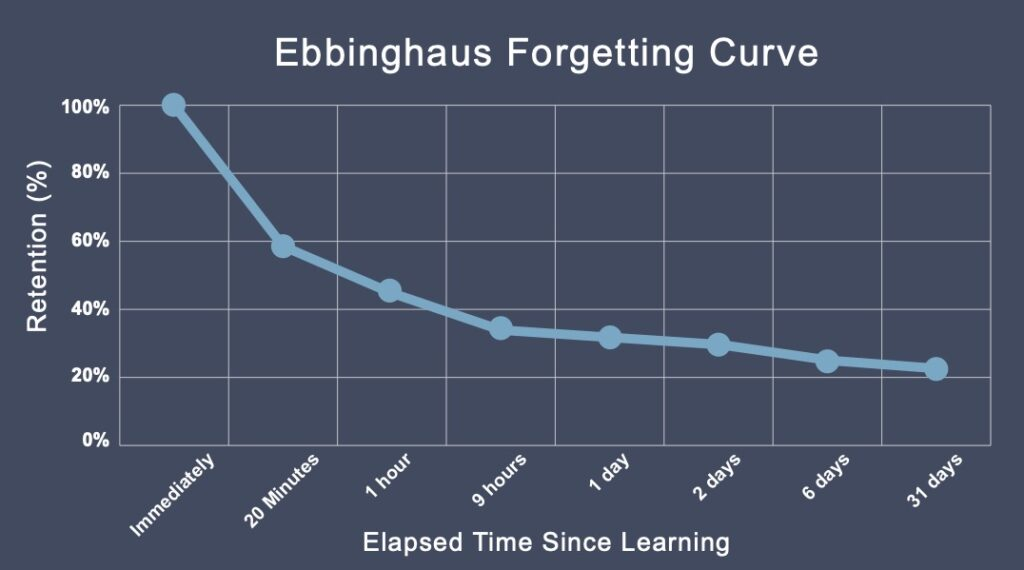
And here's the kicker: the curve is exponential.
The steepest decline happens immediately, then gradually levels off.
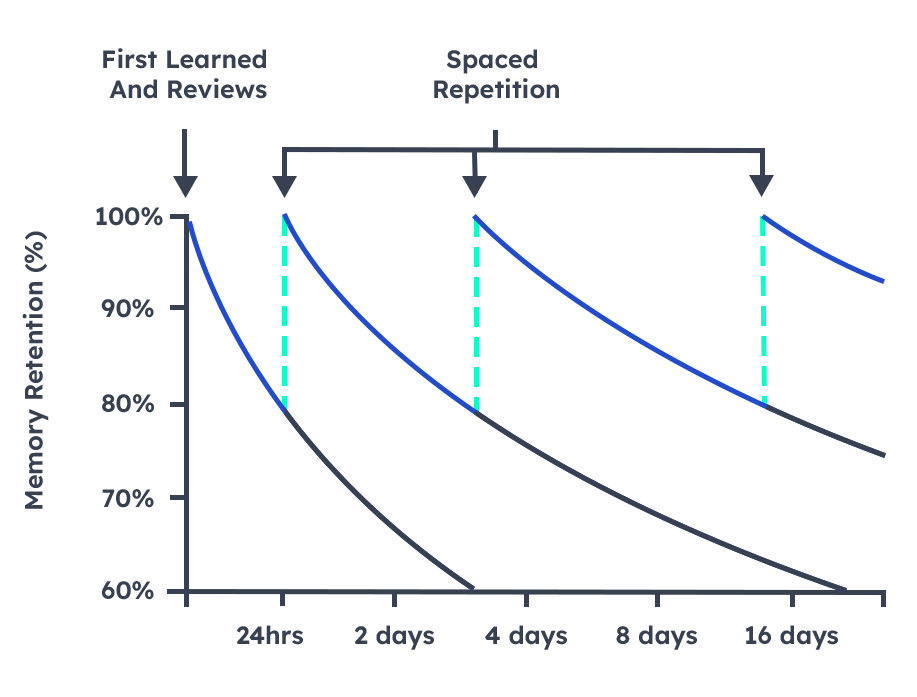
This is why most learning methods fail. The only way to prevent this decay is through spaced repetition - reviewing information at increasing intervals through active recall.
Each review strengthens memory and creates lasting neural pathways. Think of it like building a muscle - each repetition makes the connection stronger.
The Learning Pyramid
Not all learning methods are created equal. Here's how effectively we retain information:
5% from lectures
10% from reading
20% from audio/visual
30% from demonstration
50% from discussion
75% from practice
90% from teaching others
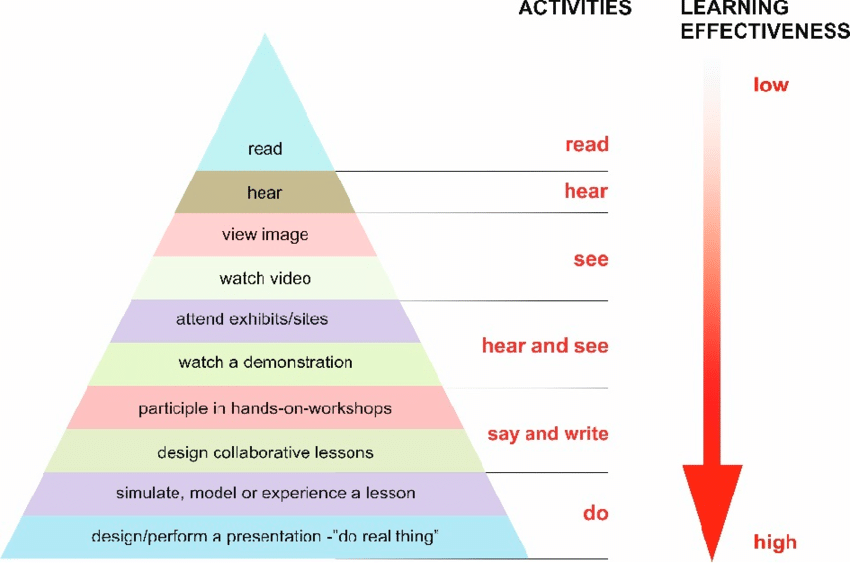
Most people stick to passive methods - reading, watching, listening.
But active learning is crucial: teaching, practicing, discussing, taking notes, and writing about what you learn.
There's a reason they say the best way to learn is to teach.
The Content Hierarchy
Just like learning methods, not all content is created equal.
Here's my Content Hierarchy Mental Model:
Books > Studies > Articles > Newsletters > YouTube Videos > Tweets > Short Form
Books have the highest value because they:
Are thoroughly researched
Have stood the test of time
Contain deep, structured insights
The Lindy Effect
Speaking of standing the test of time - the Lindy Effect states that the longer something has survived, the longer it's likely to survive.
Books that have lasted 100 years will likely last another 100. This principle helps you:
Avoid temporary trends
Focus on timeless principles
Build foundational knowledge
This is why I always advise prioritizing classic works and time-tested ideas over the latest "revolutionary" methods that pop up every day.
Now that you understand why traditional learning fails, let's look at the solution:
2) The Solution: A Systematic Approach
To fix our learning problem, we need a proper system - one that integrates the right tools and processes for effective learning and retention.
The Essential Tool Stack
Let me introduce you to the core tools that will transform how you learn and retain information.
1. Readwise: Your Central Hub
Acts as your knowledge command center
Syncs all your highlights across devices and content types
Creates daily review sessions for spaced repetition
Connects with all other tools in the stack
2. Content Capture Tools
Amazon Kindle
Best tool for reading and highlighting books
Syncs automatically with Readwise
One of my best investments for learning
Pro tip: You can send PDFs directly to your Kindle
Snipd
The ultimate podcast learning tool
Save key moments with transcripts
AI-generated summaries
Perfect for learning during commutes
Reader by Readwise
Your personal read-it-later hub
Save and highlight articles, PDFs, newsletters
YouTube video transcript highlighting
Create your own intentional content feed, not controlled by algorithms
Integrating with Kortex
Kortex is the final piece that brings everything together. Think of it as Obsidian and Notion having a baby - it's the ultimate second brain app that solves the eternal creator's struggle of centralizing notes, writing, and content in one place.
Here's how the workflow comes together:
1. Capture content through your tools (Kindle, Snipd, Reader)
2. Everything syncs to Readwise automatically
3. Readwise connects to Kortex seamlessly
4. Your highlights become part of your personal knowledge library in Kortex
The magic happens when you start using these highlights in Kortex:
Reference specific highlights in your writing
Link highlights to your notes
Connect ideas across different sources
Transform highlights into content
The Daily Workflow
Here's how this system works in practice:
1. Content Capture
Save interesting articles to Reader throughout the day
Highlight key passages while reading on Kindle
Save podcast snippets during commutes with Snipd
2. Processing
Highlights automatically sync to Readwise
Review your daily highlights in Readwise
Everything flows into your Kortex library
3. Implementation
Access all your highlights in Kortex
Reference specific quotes in your content
Create connections between ideas
Transform knowledge into output
This creates a seamless flow from input to output:
Reading → Highlighting → Reviewing → Creating
Why This System Works
The beauty of this system is that it creates an integrated workflow:
1. All your highlights sync to Readwise
2. Readwise creates daily review sessions
3. You practice spaced repetition effortlessly
4. Everything connects seamlessly to Kortex
This solves the core problems we discussed earlier:
No more forgotten highlights
No more scattered information
No more lost references
And most importantly - it gives you a structured way to actually retain and use what you learn.
If you've read my previous article on building a Second Brain in Kortex, you'll recognize this system is first step of my entire workflow. We're essentially creating the input system that feeds your Second Brain.
Now that you understand the system and tools, let's see how to actually implement this in your daily workflow.
3) Making It Work: Implementation Guide
Now that you understand the system, let's make it practical and actionable.
Quick Wins to Start Today
The biggest mistake people make when implementing a new system is trying to do everything at once.
Instead, start with these proven steps:
Begin With One Format
Pick one content type and master it first:
If you're a reader, start with books and Kindle
If you're always on the go, begin with podcasts and Snipd
If you consume lots of articles, focus on Reader
Master one workflow before expanding to others. This builds confidence and ensures sustainable habits.
The 3x15 Reading Method
This simple technique helps you read one hour daily without overwhelm:
15 minutes in the morning with your coffee
15 minutes after lunch during digestion
15 minutes before bed
Small but consistent actions compound over time. Before you know it, you're reading an hour a day without strain.
Building the Daily Review Habit
Start with Readwise's daily review feature:
Takes just 5 minutes
Builds the habit of spaced repetition
Sparks new ideas for content creation
Strengthens your retention dramatically
Avoiding Common Pitfalls
Don't Try Everything at Once
Master one tool at a time
Build sustainable habits gradually
Focus on quality over quantity
Active vs. Passive Highlighting
Don't fall into the passive highlighting trap. When highlighting:
Think about why this information matters
Consider how you'll use it later
Connect it to existing knowledge
Think about potential content ideas
Managing Information Overwhelm
Remember what Eric Schmidt (former Google CEO) said:
"We produce as much information every day as humanity did from its creation to 2003."
That's why you need to:
Trust in your system
Don't succumb to FOMO
Focus on quality over quantity
Be intentional with what you consume
Pro Tips for Maximum Impact
Readwise Highlighting Commands
Here's a game-changing tip for Kindle users:
Use
.h1,.h2, etc. for creating headers
Use
.c1,.c2to concatenate highlights
Add notes about why you highlighted something
These simple commands make organizing and retrieving information much easier later.
Organizing in Kortex
Use consistent tags for easy retrieval (you can use my tag taxonomy template to manage your tags that I share in my Free Second Brain Setup in Noah's Ark bank)
Create direct references to highlights in your content
Link related ideas together
Build a connected knowledge base over time
Remember: The goal isn't to create a perfect system overnight. It's to build a sustainable practice that grows with you.
Conclusion
If you've read this far, you understand that effective learning isn't about consuming more - it's about having the right system in place.
If you haven't seen it yet, check out my previous article on building a complete Second Brain system in Kortex.
It will show you how everything we've covered today fits into the bigger picture of your learning and content creation system.
But this is just the beginning. This system is the first step of my 3-part second brain system.
In Part 2, I'll show you how to apply the Zettelkasten method to all these highlights you're capturing.
You'll learn:
How to process information for immediate use
Create atomic notes that become content building blocks
Build a connected network of ideas that generates content for you
Subscribe to my YouTube channel to get notified when it drops.
Get Access to Noah's Ark Bank
To help you implement everything we've covered, I've created something special for you: Noah's Ark Bank – a complete collection of templates, tools, and SOPs.
Inside, you'll find:
3 complete step-by-step SOPs
8 Kortex templates for your Second Brain
Tag taxonomy system
Copywriting frameworks
Plus, as a bonus, you'll get access to all my mind maps from previous videos, making it easy to reference and implement any concept we've covered.
And if you're joining Kortex (which is free), I highly recommend joining our Discord community. Share your progress, ask questions, and get support from me and the entire Kortex team. We're very active there and always happy to help.
Remember: Every day you wait is another day of forgotten knowledge and missed opportunities.
Welcome back to the Ark,
Noah.